Okay, so check this out—I’ve been fiddling with every kind of cold storage you can imagine. Wow! Seed phrases taped under a desk, metal plates, USB dongles that felt like tiny bombs. My instinct said there had to be a cleaner way. Initially I thought a phone-based wallet would win. But then I tried a contactless smart-card and, honestly, it changed how I think about “secure and simple.”
Here’s the thing. Contactless smart-card wallets combine the physical reassurance of a hardware device with the smoothness of NFC taps. Hmm… that tactile click, that moment when a tiny card wakes and signs a transaction — it’s oddly satisfying. On one hand it’s low-friction. On the other hand it forces you to confront what true ownership looks like: do you want secrets written down on paper, or hardware that holds keys without exposing them? There are trade-offs, though—so let me walk you through what I noticed, what bugs me, and why somethin’ like the tangem wallet deserves a close look.
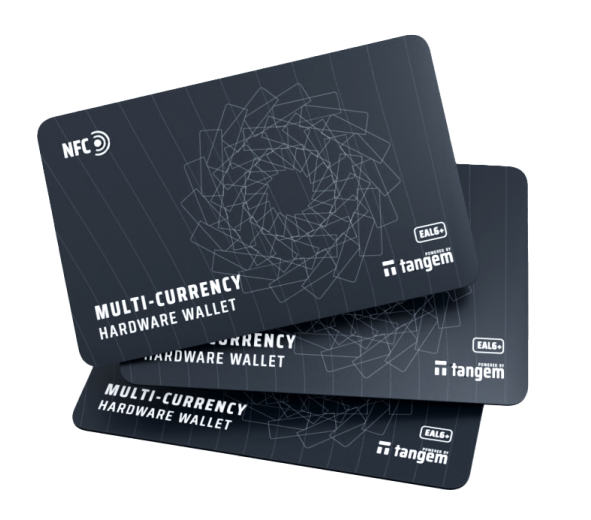
Contactless payments taught consumers to expect speed. Seriously? Yes. People want tap-and-go, and that expectation has migrated to crypto. The smart-card approach leverages NFC (near-field communication) to sign transactions without ever exposing your private key to the internet. Initially I thought latency and connectivity would be problems, but in practice it’s nearly seamless—tap, approve on your phone, done. Actually, wait—let me rephrase that: sometimes the NFC read is finicky with thick phone cases, though it’s a minor annoyance. My first impressions were shaped by a late-night transfer gone wrong (oh, and by the way, user error was involved), and that humbling moment taught me a lot about UX design in crypto devices.
Compared to seed-phrase methods, smart cards are tidy. You don’t fold paper and hide it in a book. You stash a card in a wallet or a magnetic sleeve. On the downside, if you lose the card and haven’t followed the manufacturer recovery flow, you could be out of luck. On the upside, cards like the ones sold under the tangem wallet model avoid storing seeds in plain text, and they pair cryptographic security with user-friendly form factors. I’m biased, but that mix of simplicity and strong hardware-backed keys is what makes them appealing to everyday users in the US market, where contactless payments are already mainstream.
Let me break this down practically. Short interactions win trust. Medium explanations sell the benefits. Longer thoughts reveal the risks. So: short—secure keys never leave secure element. Medium—signed transactions happen locally on the card, limiting attack vectors. Long—because manufacturers design these cards to be tamper-resistant and to use industry-standard secure elements, the threat model shifts from “is my seed phrase safe” to “how do I physically protect one or two cards?”, which for many people is an easier problem to solve in daily life.
Whoa! Hold up—no solution is bulletproof. There are attack surfaces. NFC can be intercepted in theory, though real-world attacks require proximity and specialized gear. My gut said the biggest risk wasn’t remote hacking but human factors: losing a card, using a compromised phone, or ignoring firmware updates. On one hand the cryptographic hardware dedicated to secure element chips provides excellent isolation. Though actually, your safety depends on following device procedures (backup, authentication, firmware checks). I’m not 100% sure every user will do that, but the model simplifies some of the most error-prone steps like seed backups.
Here’s a pattern I noticed while testing multiple smart-card setups: the mental model is simpler for non-technical folks. They understand “card = money” already. They get the metaphor intuitively. So adoption barriers drop. However, traders and security purists might balk at single-card risk without a clear multi-card or multisig strategy. That’s fair. The real-world sweet spot is combining a card with secondary recovery options or custody practices that fit your appetite for risk.
Something felt off about overpromises from some vendors. Marketing sometimes glosses over nuances—recovery, compatibility, and supply chain integrity matter. I’m telling you this from experience: ask about manufacturing security, firmware auditability, and whether the card supports firmware updates. Also check whether the vendor provides clear, tested recovery flows.
Scenario one: you want a quick pay-or-transfer flow for everyday crypto use. Tap your card, confirm on the phone, transact. Fast. Scenario two: long-term storage—stash a set of cards in different secure locations or use a multisig scheme with other devices. More complex, more resilient. I made mistakes. I once mixed up cards because I didn’t label them. Learn from me: label, document, and test recovery steps. Double-check everything. Yes it’s tedious. But it’s less painful than irreversible loss.
Also—compatibility. Not every dApp or wallet app will recognize every card model. That matters if you plan to interact with DeFi or exotic protocols. Check lists, ask the community, and test small amounts first. If you like a polished on-ramp, look for devices and software that support broad standards.
Short answer: often yes, though context matters. Cards use secure elements similar to other hardware wallets. Medium answer: their security model is strong when paired with good user practices. Long answer: you have to consider recovery methods, firmware provenance, and your own habits; multidevice setups and multisig arrangements can bridge convenience and maximum security, and if you want a hands-on recommendation check a trusted vendor like tangem wallet for a sense of how these products present their security trade-offs.
Wow—loss is scary. If you followed the vendor’s backup and recovery process you’re probably okay. If not, well, lesson learned the hard way. Medium guidance: always register and set up recovery options when possible. Long guidance: adopt a plan before you need it—spare cards, multisig, or custodial fallbacks are sensible.
Yes. They map to familiar behaviors—tap, confirm, go. That reduces friction and errors. But simplicity shouldn’t lull you into skipping security basics. Write down recovery steps, label devices, and do small test transactions first.
I’ll be honest—I have favorites. I’m partial to tools that respect user time and make security unobtrusive. This whole contactless smart-card idea feels like that: low fuss, practical security, and a UX that resonates with everyday people. There’s still work to be done: better interoperability, transparent audits, and clearer recovery patterns. But if you’re tired of seed phrases and want a small, pocketable, secure way to carry crypto, a smart-card hardware wallet is worth trying. Try one, test it, and then judge—your experience will probably be the same as mine: pleasantly surprising, slightly imperfect, and very human.